

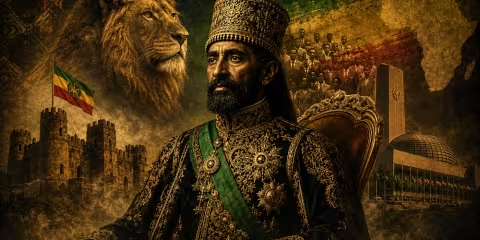
Imperial Heritage Collection
Haile Selassie I
The Lion Who Carried Ethiopia's Voice
A tribute to Haile Selassie I: Emperor of Ethiopia, defender of Ethiopian sovereignty, advocate for African unity, and a figure whose image and legacy became deeply woven into Rastafari and Roots culture.
A Son of Ethiopia
Before the crown
Born Tafari Makonnen in 1892, the man who would become Haile Selassie I grew into one of the defining figures of modern Ethiopian history. Before taking the imperial throne, Ras Tafari served as a regional ruler, statesman and regent, taking an active role in Ethiopia's international affairs and modernization.
His path toward the crown was also a path toward responsibility. Ethiopia stood at the meeting point of ancient tradition, modern diplomacy and growing pressure from European imperial powers. The years ahead would place its sovereignty at the centre of a much larger African story.
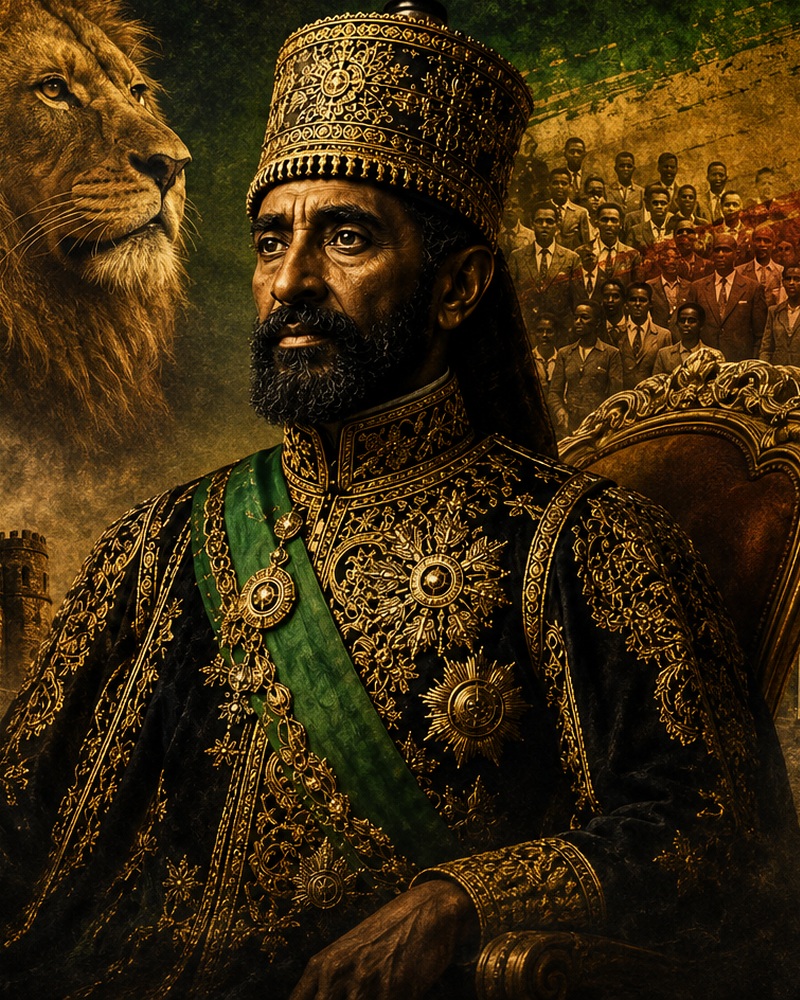
The Imperial Coronation
Crowned in 1930
On 2 November 1930, Ras Tafari was crowned Emperor of Ethiopia and took the throne name Haile Selassie I. The coronation placed Ethiopia's ancient imperial tradition before an international audience and began a new chapter in his public life.
The crown carried ceremony, but it also carried the weight of a nation navigating an increasingly dangerous world. Haile Selassie's reign would soon be tested by invasion, exile and the struggle to restore Ethiopian independence.
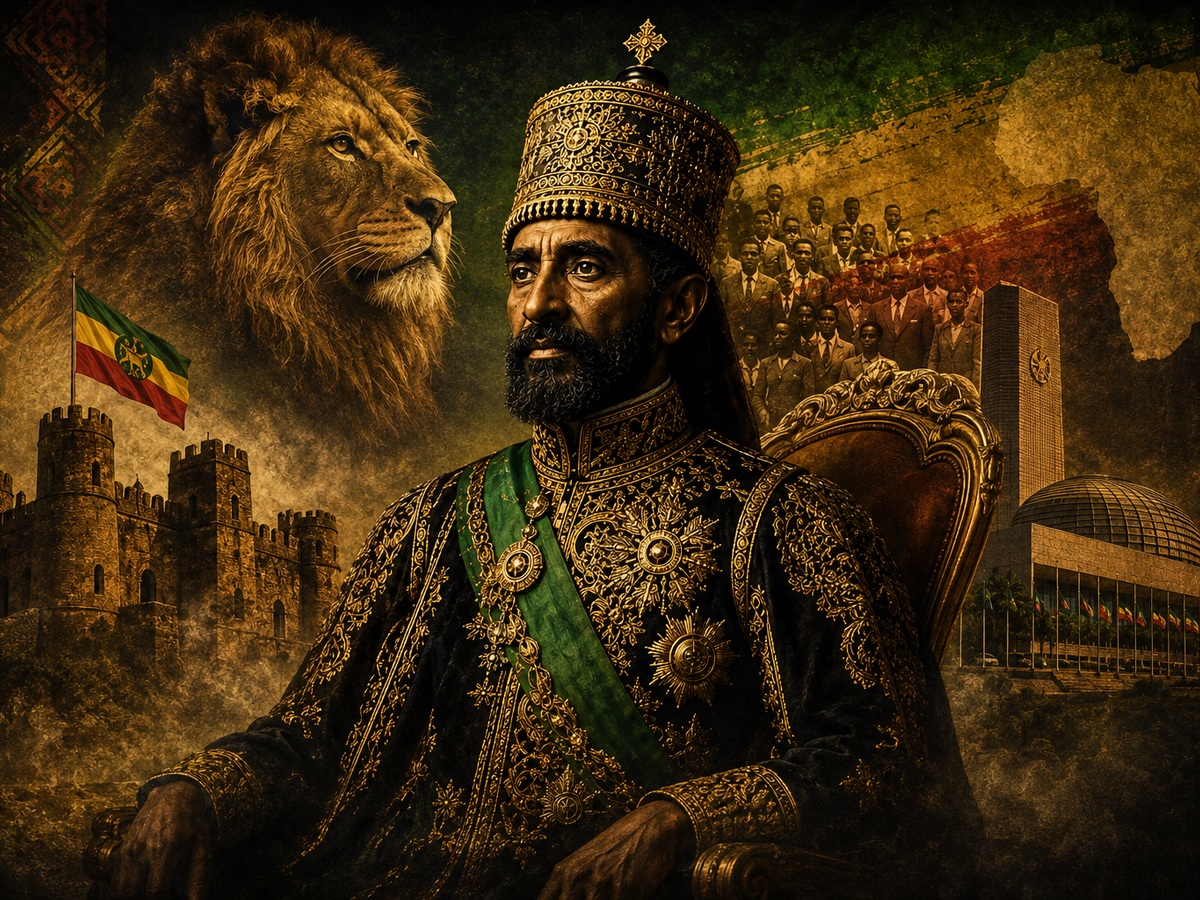
Ethiopia Under Fire
The voice of a nation
In 1935, Fascist Italy invaded Ethiopia. After Italian forces entered Addis Ababa in 1936, Haile Selassie went into exile. Yet exile did not silence Ethiopia's claim to sovereignty.
In Geneva on 30 June 1936, he addressed the League of Nations and appealed to the international community over the invasion of his country. His appearance became one of the most remembered international moments of his life: an Ethiopian Emperor carrying the question of African sovereignty into the centre of world politics.
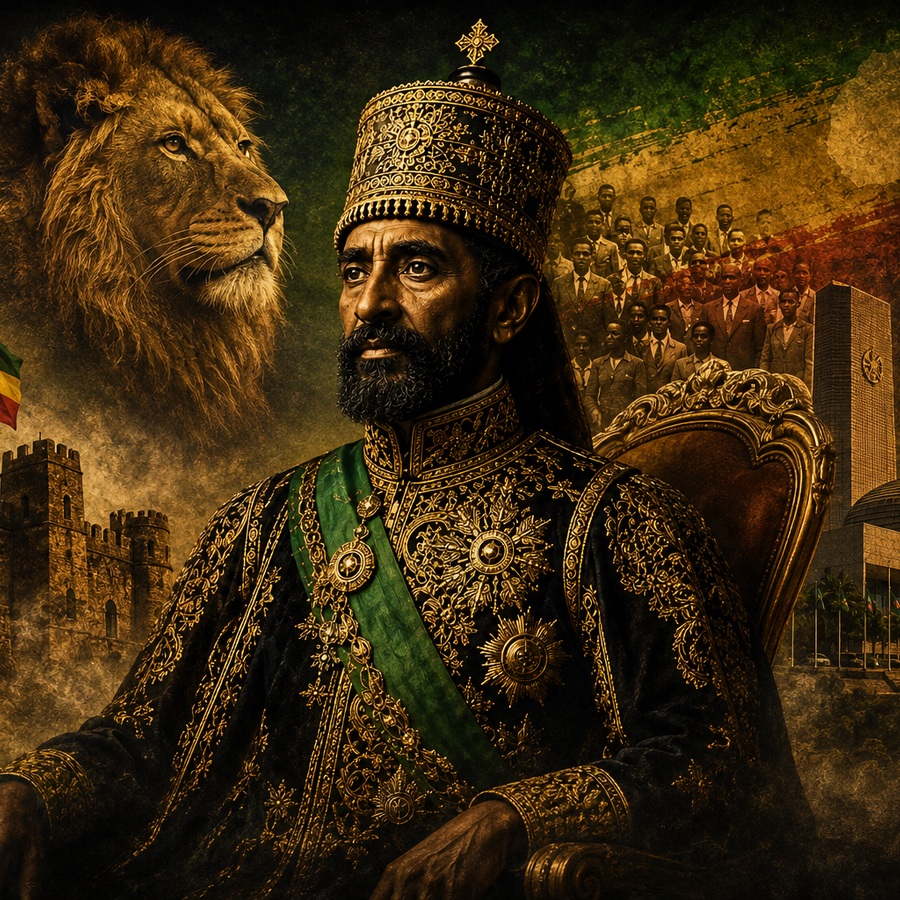
Return and African Unity
Africa finds its voice
Haile Selassie returned to Addis Ababa in 1941 after the defeat of Italian occupation forces. In the decades that followed, Ethiopia increasingly became a meeting place for a wider African political vision.
In May 1963, Addis Ababa hosted the historic summit at which independent African states established the Organization of African Unity. The African Union's own archives recognise the decisive role of the Imperial Government of Ethiopia in organizing the meeting and consolidating African unity.
For a continent emerging from colonial rule, Addis Ababa became a place where independence, sovereignty and African solidarity could be discussed on African soil.
Ethiopia Meets the Caribbean
The journey to Jamaica
In April 1966, Haile Selassie made a three-day state visit to Jamaica. The visit became an extraordinary cultural moment, particularly for the Rastafari community, for whom the Ethiopian Emperor held profound spiritual significance.
The meeting brought Ethiopia and Jamaica into a shared public moment: Africa and the African diaspora, imperial history and emerging Roots culture, the ancient symbolism of Ethiopia and the lived experience of Black Jamaica.
His presence on the island would continue to echo through the music, language and visual culture of Roots Reggae and the wider Rastafari movement.
An Enduring Legacy
The lion still travels
Haile Selassie's legacy cannot be reduced to a crown or a single interpretation. His reign included modernization, diplomacy, resistance to invasion and a significant role in the development of African international cooperation. His rule is also historically complex and remains the subject of debate.
Within Rastafari, however, his name carries a distinct spiritual meaning. Across Jamaica, Africa and the wider African diaspora, his image became a symbol of Ethiopia, dignity, African identity and a connection to a deeper history.
For Fyah Mawi, remembering Haile Selassie I is also remembering the roots behind conscious music: Africa, memory, identity, resistance, spirituality and the enduring search for freedom.